Where Does Weight Loss Come From?
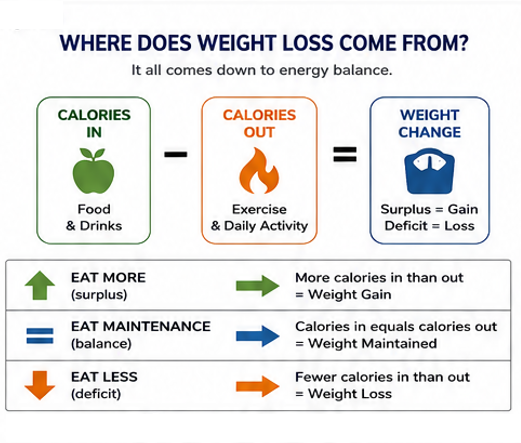
The simple answer is a calorie deficit. When your body uses more energy than it receives from food and drink, it must make up the difference by drawing on its stored energy reserves, primarily body fat. Strength training and cardiovascular exercise increase the number of calories you burn, while sensible nutrition helps control the number of calories you consume. The most effective approach combines both. Weight loss rarely happens in a perfectly straight line because body weight naturally fluctuates from day to day due to changes in water, food and glycogen stores. Don't become discouraged by these short-term changes. Instead, focus on maintaining a consistent calorie deficit and judge your progress over weeks rather than days.
Losing weight is not about finding a miracle diet or following complicated rules. Sustainable weight loss comes from consistently using more energy than you consume, while eating well enough to support your health and maintain muscle.
The Fundamentals of Sustainable Weight Loss
The key to weight loss is creating a calorie deficit that you can maintain over time. You don't need to make the deficit extreme. A moderate, consistent approach is usually easier to stick to and allows you to continue exercising and living normally.
What you eat matters too. Prioritise protein, vegetables, fruit and other nutritious foods, while keeping portions appropriate for your goals. Protein and strength training are particularly useful because they help protect muscle as you lose body fat.
Regular activity increases the amount of energy you use and helps support your overall fitness. Walking, cardio and strength training can all contribute, but your diet remains an important part of controlling your overall calorie intake.
Think long term. The aim isn't simply to lose weight; it's to reduce body fat, maintain as much muscle as possible and develop habits that you can continue after you reach your goal